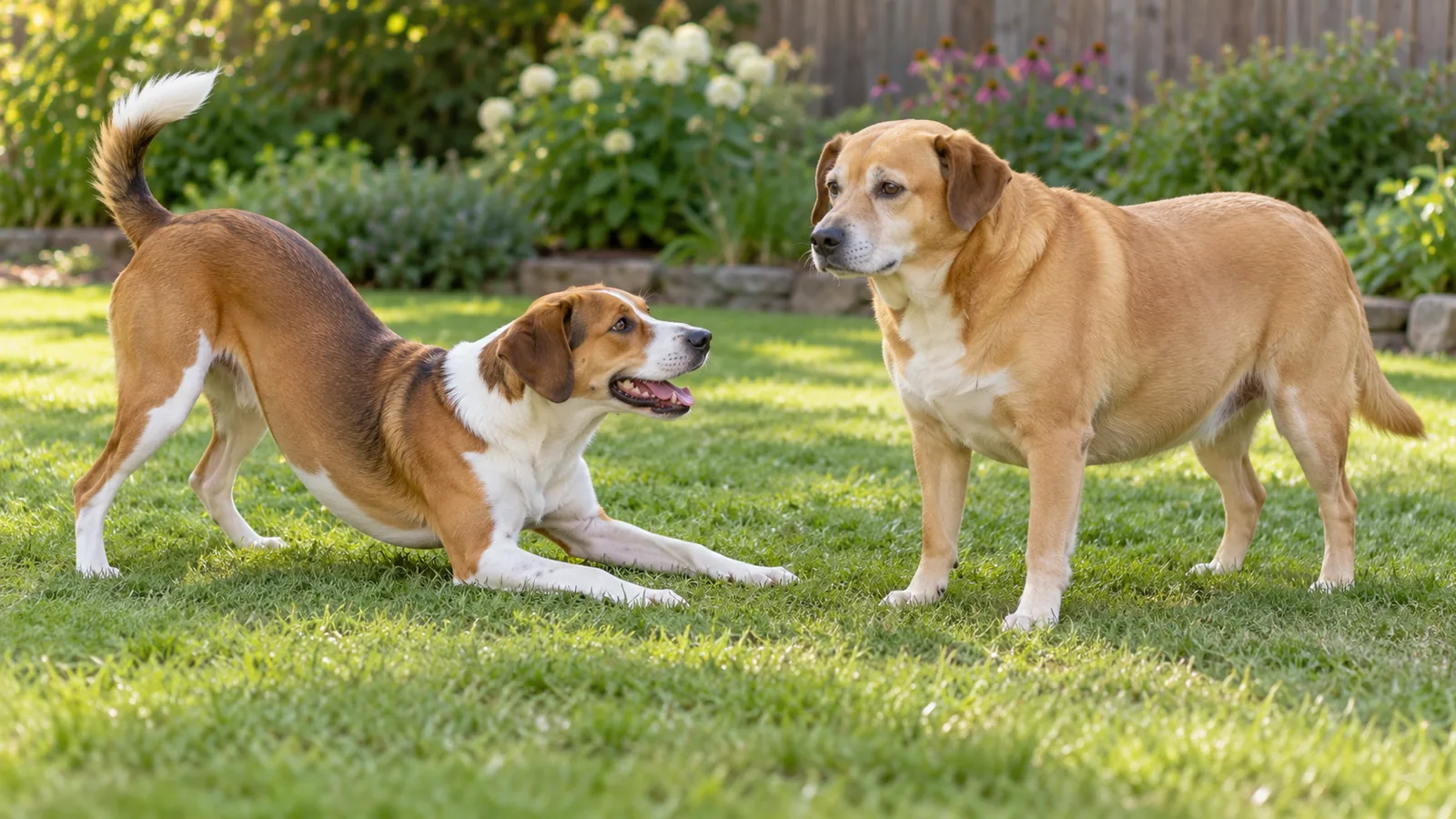
Scoring your pet's body condition at home comes down to your hands and two viewing angles: feel along the ribs, look down from above for a waist, and check the side profile for a belly that tucks up. Those three landmarks place your dog or cat on a nine-point scale where 4 to 5 is ideal, 6 and 7 are overweight, and 8 and 9 are obese. Each step above ideal works out to roughly 10 percent over your pet's healthy weight, which means a 10 kg dog carrying one extra kilogram has already moved a full point. A change that small is easy to miss from across the room, and simple to reverse once the scoop in your hand holds a measured amount rather than a guess.
Trafalgar Animal Hospital in Oakville wants to help prevent the diseases that come with that extra weight, so we check body condition at every wellness and preventive care visit. We can put real numbers on the calories in meals and treats, and adjust as your pet changes. When the extra weight has already left your pet sore and slow to get up, our laser therapy and rehabilitation can get them comfortable enough that exercise is realistic. To find out where your pet sits today, book a weight check and we will score them with you.
Body Condition Scoring: The Basics
- Your hands tell you more than the scale does: two pets at the same weight can be in very different shape, so check the ribs, waist, and belly once a month.
- Measured portions built around your pet's ideal weight do more for weight loss than extra exercise.
- Cats have to lose slowly, since a sharp cut in calories can set off a dangerous liver disease.
- Weight that changes while the portions stay the same points to a medical cause, not to a smaller scoop.
Which Body Systems Does Extra Weight Wear Down First?
The joints and spine usually feel it first, but extra weight reaches nearly every system. Heavy pets also tend to live shorter lives than lean pets of the same breed.
- Joints and spine: Arthritis and cruciate ligament tears both get more likely with extra load, and a dog with intervertebral disc disease who was only hesitant to jump on the couch can lose the use of their back legs within hours and need emergency surgery.
- Hormones and the pancreas: Fat tissue is active rather than inert and interferes with insulin, raising the risk of diabetes. Heavy pets are also more prone to pancreatitis, and a single rich, fatty meal can bring on an attack.
- Urinary tract and skin: Bladder infections and urinary stones both track with heavy body condition, and a heavy dog or cat who can't reach around to groom adds skin-fold infections to the list.
- Heart and breathing: Blood pressure tends to run higher in overweight pets, and sustained high pressure damages the heart, kidneys, and eyes over time. Flat-faced breeds like Pugs and Persians have little airway to begin with and lose more of it as the weight goes up.
- Anesthesia: Fat changes how anesthetic drugs are distributed, which makes a dental cleaning a bigger risk at a 9 than at a 5.
- Heat tolerance: Panting is how dogs shed heat, and a humid 28 °C afternoon in Oakville asks more of an overweight one.
If you’re worried about a weight-related disease, we handle urgent and emergency care for pets in Oakville during our open hours.
What Does a Heavy Pet Cost a Family Over the Years?
Most of what extra weight costs a family comes later, in treating the problems it helped cause. Diabetes means insulin twice a day for life, plus syringes and repeat blood sugar checks, so it becomes a monthly bill rather than a one-time one. Arthritis brings years of pain medication and rechecks, and a heavy pet eats more food and treats each month than a lean one. Keeping your pet lean is one of the best ways to keep your vet bills low.
Which Dogs and Cats Are Most Likely to Put On Extra Weight?
The pets who gain most easily are neutered, middle-aged, and fed by eye. Labradors, Beagles, Pugs, Dachshunds, and indoor cats sit near the top of that list, and a shared bowl in a multi-pet house hides who's eating what.
- Neutering: Daily calorie needs drop while appetite holds steady, so the portion that was right at nine months is often too generous at eighteen.
- Indoor life: Indoor cats trade a day of hunting for a bowl that never empties.
- Middle age: Activity drops before the meals do.
- Breed build: The heavy-set look that wins in a show ring isn't easy on a dog's joints over a twelve-year life.
Our veterinarians can tell you whether what you're feeling along the ribs is breed build or extra fat.
Why Doesn't the Scale Alone Tell You If Your Pet Is Healthy?
A number on the scale says nothing about what those kilograms are made of. Two cats can both weigh 5.5 kg and sit in different health territory, because fat and muscle condition are judged separately, and a pet who holds steady on the scale while losing lean mass isn't thriving.
The most useful check at home is what your pet can still do: reach the bookshelf in one jump, or finish the walk at the pace they started.
What Do the Numbers 1 Through 9 Mean?
Body condition scores run on a nine-point scale: 1 is every rib and vertebra standing out, 4 to 5 is ideal, and 9 is no waist left at all. Plenty of pets who look normal at home sit at a 6.
Use your palm flat, not your fingertips. At an ideal score you can count the ribs through a thin layer of fat without pressing hard.
| Score | What your hands find | What you see |
| 1 to 3, too thin | Ribs, spine, and hip bones sharp, no fat over them | A severe waist, deep tuck, hollow in front of the hips |
| 4 to 5, ideal | A thin fat layer over ribs you can count with a flat palm | An hourglass when you look down, a belly that slopes upward from the side |
| 6 to 7, overweight | Ribs take some pressing to find, fat pads over the lower back | Waist straightening out, belly level rather than tucked |
| 8 to 9, obese | Ribs buried, fat pads at the tail base and across the chest | No waist at all from above, belly sagging |
Once a month is plenty at home, and it matters most with a long-haired cat or a doodle coat. Puppies and kittens change shape week to week, and seniors can lose muscle while fat increases, which keeps the scale flat and hides both changes at once. For adult dogs and cats we recommend an exam every six months, and wellness exams are where the portion gets revised: a newly spayed one-year-old and a thirteen-year-old on arthritis medication don't eat the same amount.
Why Is a Score of 3 or Lower a Problem Too?
An underweight pet faces a different set of risks: less immune reserve, trouble holding body temperature, lost muscle they need to get around, and slower healing from illness or injury. Weight coming off without a diet change isn't a win. If your pet is losing condition, call or text us and we'll start with an exam. Blood and urine testing usually comes next, to find out why and start the right treatment.
How Much Should You Be Feeding for the Weight You Want?
Portions get built around the weight you're aiming for, not the one on the scale today, and that daily number has to include the treats. The chart on the bag is written for an average pet, and how much to feed shifts with age, spay or neuter status, and activity level.
How Do You Set the Daily Portion and Count the Extras?
Work out the daily target with a calorie calculator, then measure each cup carefully; don’t heap those scoops! Then count everything else: the dental chew, the kibble handed over for sitting, the spoon of wet food that carries the pill. Where several people in the house feed the pet, measure out the day’s allowance and leave it on the counter. Pull snacks and treats from that set amount so it’s visible to the whole household.
Why Do Cats Need to Lose Weight More Slowly Than Dogs?
Cats come off weight safely at about 0.5 to 1 percent of body weight a week, because a sharp calorie cut can trigger hepatic lipidosis, a liver failure that sets in when fat is mobilized faster than the liver can process it. A cat who refuses the new food and eats nothing for 24 hours needs a phone call that day. Never halve a cat's portion on your own, and skip human diet foods and over-the-counter appetite products entirely.
Do You Need a Veterinary Weight-Loss Diet, or Will a Smaller Portion Do?
A therapeutic weight-loss diet has been through feeding trials showing it takes fat off while sparing lean muscle, which a bag labeled light or healthy weight cannot promise when you're choosing a food off the shelf.
| What to compare | Therapeutic weight-loss diet | Store-bought light or healthy-weight food |
| Feeding trials | Tested for fat loss with muscle preserved | Usually untested |
| Formulation | Higher protein and fiber to hold muscle and satisfy appetite | Often lower fat and little else |
| Best fit | A lot to lose, or other illness in play | Small adjustments in a healthy pet |
| Follow-up | Portions and rechecks set with us | On your own |
None of that makes a store-bought food the wrong pick. A dog who needs to drop half a kilogram often gets there on a smaller measured portion of what's already in the bin, while a cat with 2 kg to lose, or a dog with arthritis and early kidney changes, does better on a tested diet. Ask us and we'll match the diet to your pet's score, their other health problems, and how much there is to lose.
What Does a Realistic Weight-Loss Plan Look Like at Home?
A safe pace for dog weight loss is 1 to 2 percent of body weight a week, about 300 to 600 grams on a 30 kg Labrador.
- Measured meals on a schedule: Two or three set meals beat a bowl that's always full.
- Make dinner last: Puzzle feeders and slow bowls stretch a meal out for the pet who inhales it.
- Activity for dogs: Several shorter walks beat one long weekend hike, which also suits an Oakville winter.
- Activity for cats: Helping a cat lose weight leans more on measured portions than on activity, though short wand sessions and kibble scattered across a few hiding spots turn a meal into the hunt a cat is wired for.
- Cheaper rewards: Green beans, cucumber slices, baby carrots, or a few pieces counted out of the day's kibble work as well as a biscuit for most dogs.
- Tracking: Weigh in every few weeks, and trim the portion again if nothing has moved in a month.
If your pet is already sore, more exercise is the wrong place to start. Our team can judge what those joints will tolerate now and start rehabilitation at a level your dog or cat can handle.
Which Illnesses Change a Pet's Weight Without a Change in Food?
Weight that moves while the portions stay exactly the same is worth a workup, because a handful of diseases alter appetite, speed up or slow metabolism, or shift where the body puts its fat.
- In dogs: A dog who gains weight on the same measured portions, slows down, and grows a dull or thinning coat may be showing hypothyroidism rather than overfeeding, and a thyroid panel separates the two. Cushing's disease tends to look like a pot-bellied silhouette with a ravenous appetite and heavy drinking, which reads as weight gain when the real problem is excess cortisol moving fat around.
- In cats: An older cat who eats constantly and still gets bonier is the classic picture of an overactive thyroid. Kidney disease and cancer take condition off more quietly, so a 500 g drop on a 5 kg cat needs a workup, not congratulations.
- Arthritis pain: Sore joints quietly cut down how much a dog or cat moves. They skip the stairs, shorten the walk, or stop jumping onto the couch, so they burn fewer calories on the same meals. The extra weight then puts more load on those painful joints, which makes moving hurt more and starts the cycle again. Treating the pain is often what breaks it, because a comfortable pet moves more, and the weight comes off more easily once exercise stops hurting.
- When it isn't fat at all: Fluid from heart disease, or an enlarged organ in the belly, can make a dog look like they're gaining while the spine underneath gets sharper. X-rays and an echocardiogram, which is an ultrasound of the heart, tell the difference between fluid and fat.
When the numbers don't add up, we start with bloodwork and urinalysis, and treating what's driving the change is usually what makes a healthy weight possible again. Laser therapy is a great addition for pets with arthritis pain that’s keeping them from wanting to move, and can help them feel comfortable enough to start exercising.
Questions We Hear About Pet Weight and Body Condition
Is the loose flap of skin on my cat's belly a sign they're overweight?
That low-hanging flap in front of the hind legs is the primordial pouch, a normal fold of abdominal skin that plenty of lean cats have. It isn't a fat deposit, so score your cat by the ribs and the waist behind them instead. If the pouch feels thick and firm rather than loose and empty, mention it at the next visit.
How long does it take a dog or cat to reach a healthy weight?
Reaching a healthy weight usually takes months, and a pet with 2 or 3 kg to lose will need several of them at a safe pace. Crash diets backfire: pets lose muscle along with fat, get hungry enough to raid the counter, and regain it once the portions go back up.
How do I feed two pets different amounts in the same house?
Separate the bowls, then separate the pets. Feeding in different rooms with the doors shut for 20 minutes solves most of it, and picking the bowls up afterward stops the grazing that makes portions impossible to track. For a cat who needs to eat away from a food-motivated dog, a feeding station on a counter or a microchip-activated feeder works well. If one pet is on a prescription diet, give us a call and we'll help you work out a routine that keeps the two diets separate.
When You're Ready to Talk About Your Pet's Weight, We're Here
Better body condition shows in the small things: an easier jump onto the bed, fewer stiff mornings, more good years. Bring the food bag and the treat list to Trafalgar Animal Hospital in Oakville, and we'll put a real number on where your pet sits and a portion you can live with. Schedule a visit if you aren't sure what you're feeling along the ribs, or if the weight has changed while the food has stayed the same.